

The Fluoride Debate Hit California: What North County Parents Should Actually Do About Their Kids’ Teeth
California’s ongoing fluoride policy debate has North County parents asking practical questions about protecting their children’s teeth. The core answer is that professional preventive care, including fluoride varnish, dental sealants, and consistent home brushing routines, becomes more important, not less, when community water fluoridation is uncertain. Families who rely on bottled or filtered water are often missing fluoride entirely without realizing it. Starting dental visits by age one, getting fluoride varnish at each cleaning, and applying sealants when first molars arrive around age six are the most evidence-backed steps available in 2026. The debate between fluoride and fluoride-free approaches is real, but for most children at standard or elevated cavity risk, the professional fluoride track record remains the stronger choice. Home habits close the gap that office visits can’t cover.
Your Gums Could Be Predicting Alzheimer’s: The New Research Every Adult Should Know
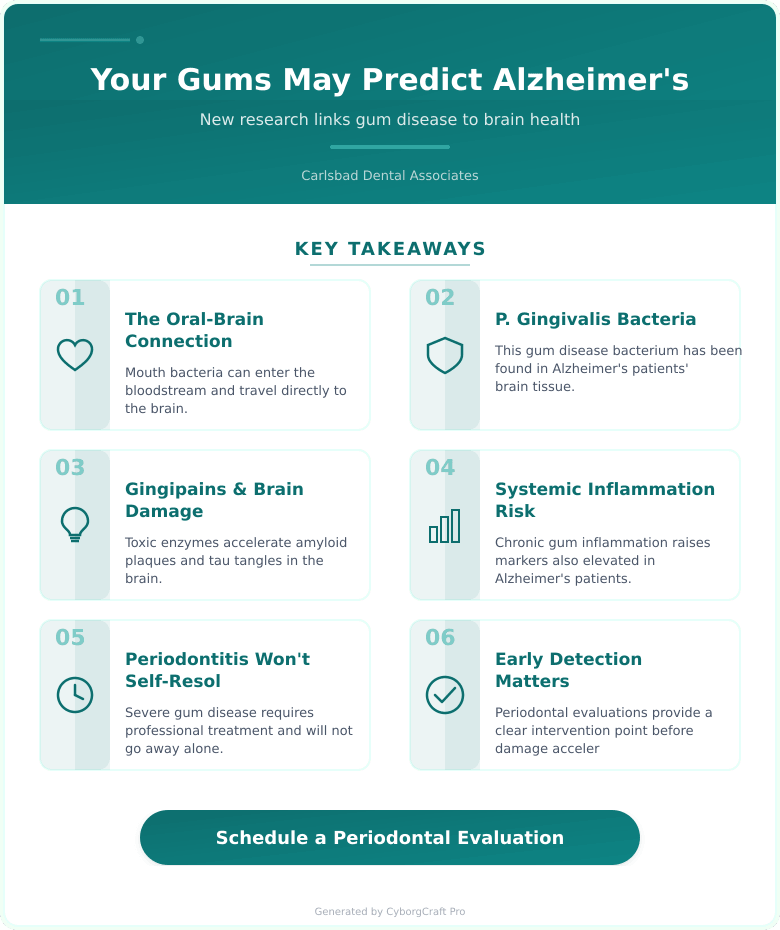
New research is strengthening the connection between gum disease and Alzheimer’s risk, with studies finding that bacteria from infected gum tissue can migrate to the brain and trigger the neuroinflammation associated with cognitive decline. The specific bacteria involved, Porphyromonas gingivalis, produces toxic enzymes called gingipains that have been detected in the brain tissue of Alzheimer’s patients. Adults with severe periodontitis face a significantly elevated risk of dementia compared to those with healthy gums. The good news is that gum disease is treatable and measurable. Routine periodontal evaluations, deep cleaning when needed, and consistent home care all reduce the bacterial and inflammatory burden that researchers believe drives this brain health connection. Catching problems early gives you more options and better outcomes across the board.
AI Can Now Design Your Smile Before a Drill Ever Touches a Tooth – Here’s How It Works
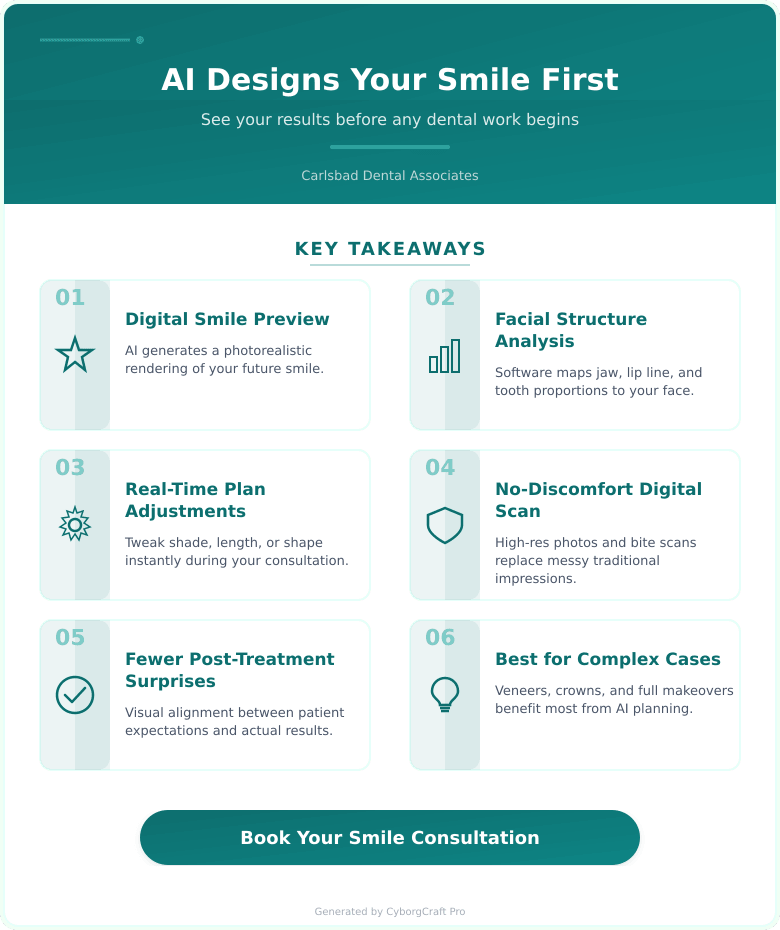
AI smile design uses artificial intelligence to generate a photorealistic preview of your post-treatment smile before any dental procedure begins. The process starts with digital imaging and facial scanning, followed by AI analysis that maps tooth proportions, shade, and symmetry to your unique facial structure. Patients can review and adjust the rendering before approving any treatment plan, which significantly reduces miscommunication and post-treatment surprises. The technology works across cosmetic treatments including veneers, whitening, crowns, and full smile makeovers. Most cosmetic procedures are not covered by dental insurance, so understanding costs upfront matters. For Carlsbad residents considering cosmetic dentistry in 2026, AI-assisted planning offers a clearer, lower-risk path to the smile they actually want.
Same-Day Crowns Are Real: How CEREC Replaces Two Weeks and a Goopy Mold in One Visit
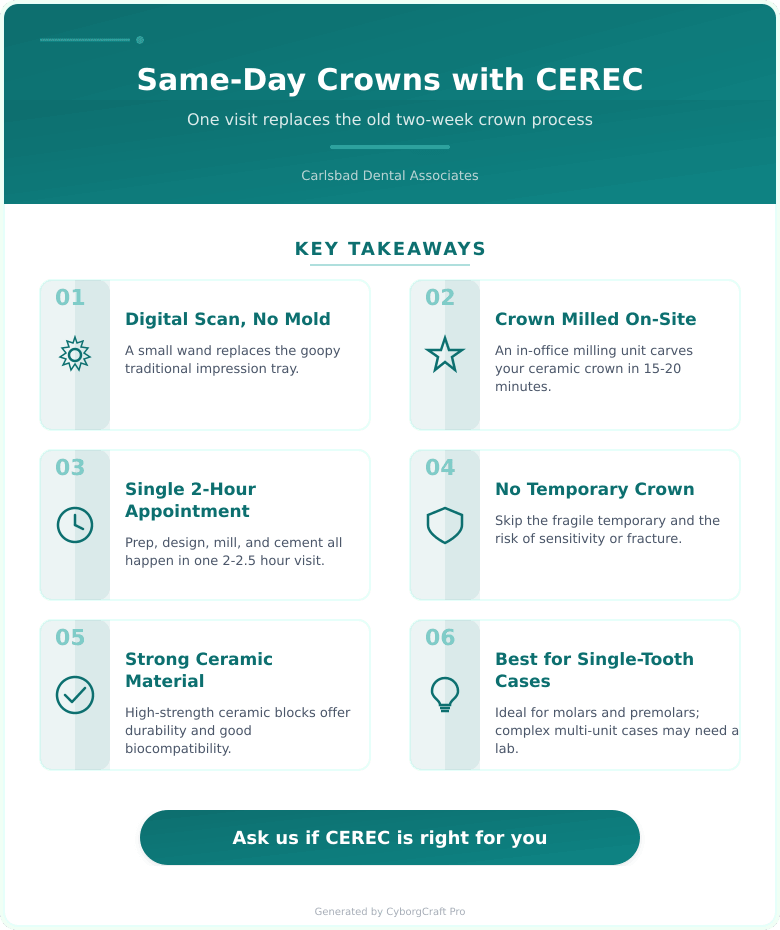
CEREC same-day crowns use digital scanning and in-office milling to produce a permanent ceramic crown in a single 2 to 2.5 hour appointment, eliminating the two-visit process most patients dread. The technology skips traditional impression material entirely, replacing it with a precise intraoral scan. Patients avoid the risks of temporary crowns, the inconvenience of a second appointment, and the 10 to 14 day lab wait. For most single-tooth restorations, same-day crowns are clinically comparable to traditionally fabricated ones in both strength and appearance. Insurance coverage typically mirrors standard crown benefits. Delaying a needed crown often leads to more complex treatment, making same-day access a practical reason to move forward sooner.
Ultra-Thin Veneers vs Traditional: Why 2026’s Smile Makeovers Barely Touch Your Enamel
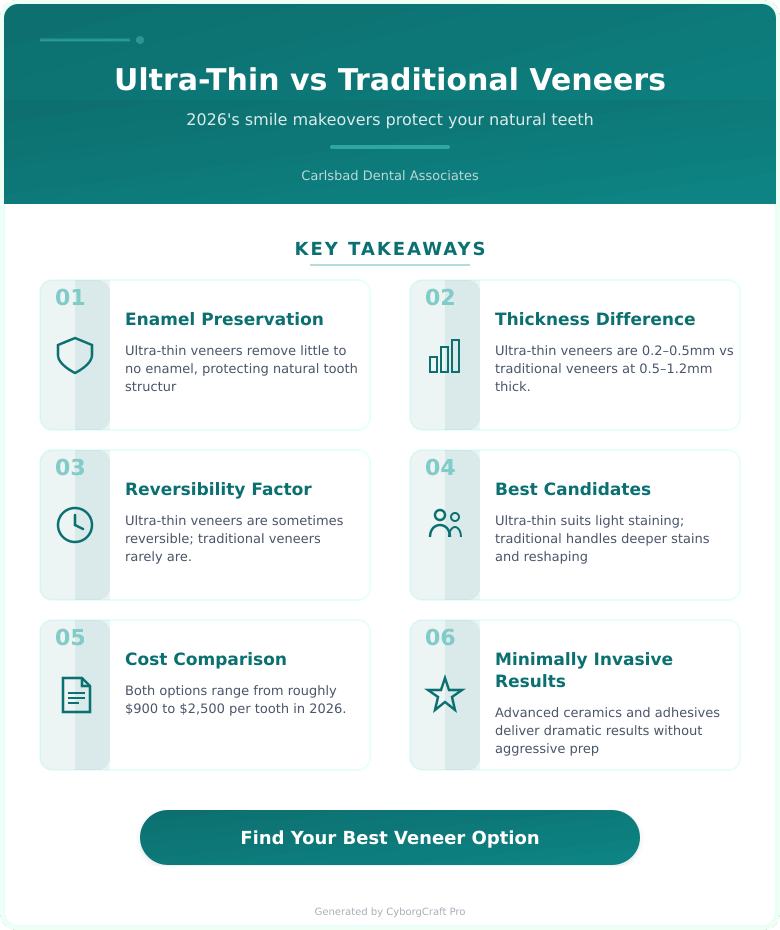
Ultra-thin veneers offer a minimally invasive way to transform a smile without the permanent enamel removal that traditional veneers require. At just 0.2 to 0.5 mm thick, these porcelain shells bond directly to the tooth surface, making them a strong option for patients with healthy enamel who want to correct color and minor shape issues. Traditional veneers still hold an edge for deeper stains, significant reshaping, or more complex cosmetic corrections. Both types carry similar price ranges and longevity in 2026. Knowing which option fits your mouth starts with a proper clinical exam, a digital smile preview, and an honest conversation about your goals. Patients across Carlsbad and North County San Diego are increasingly choosing the minimal-prep route for its preservation benefits and faster process.
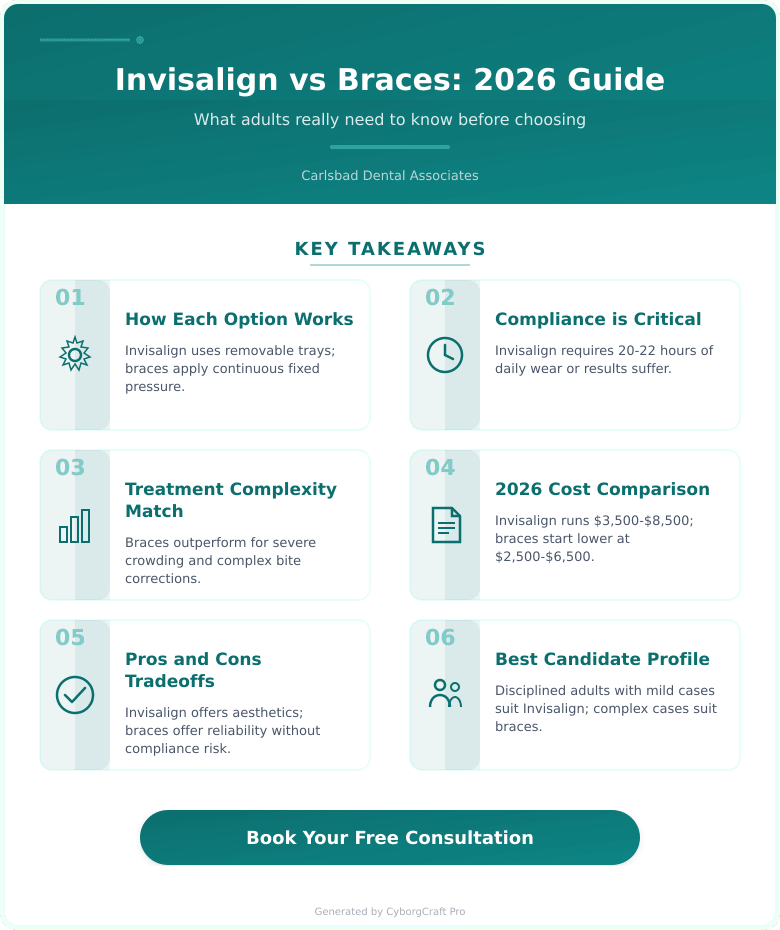
Invisalign vs Braces in 2026: The Honest Comparison Adults Keep Searching For
Choosing between Invisalign and traditional braces depends on far more than how they look. This comparison breaks down how each orthodontic option works, what it costs in 2026 (typically $3,500-$8,500 for Invisalign and $2,500-$6,500 for braces), and which adults are best suited to each. Clear aligners require 20-22 hours of daily wear discipline, while fixed braces handle complex cases more predictably. Insurance, FSA and HSA funds can reduce out-of-pocket costs for California residents. A step-by-step decision checklist helps readers evaluate their own compliance habits, case complexity, and lifestyle before committing. The post also covers what to expect after treatment ends and how to verify provider credentials through the California Dental Board.